
Regional unemployment disparities USA
Why Some Parts of America Have Way More Jobs Than Others (And What It Really Means for You)
Hey friend, it’s Ghulam here – yeah, the same guy who moved from a tiny town in the Midwest to California chasing tech jobs back in 2018. Let me tell you, nothing hits you harder than driving across the country and seeing “Now Hiring” signs everywhere in Texas… and then pulling into my cousin’s town in Ohio where half the main street is boarded up. Same country, same year, totally different worlds.
Today I want to talk about something that doesn’t get enough real talk: regional unemployment disparities in the USA. In plain English – why some states and cities are basically begging for workers while others can’t create jobs fast enough to keep people from moving away.
First, the Cold Hard Numbers (But I Promise They’re Easy to Understand)
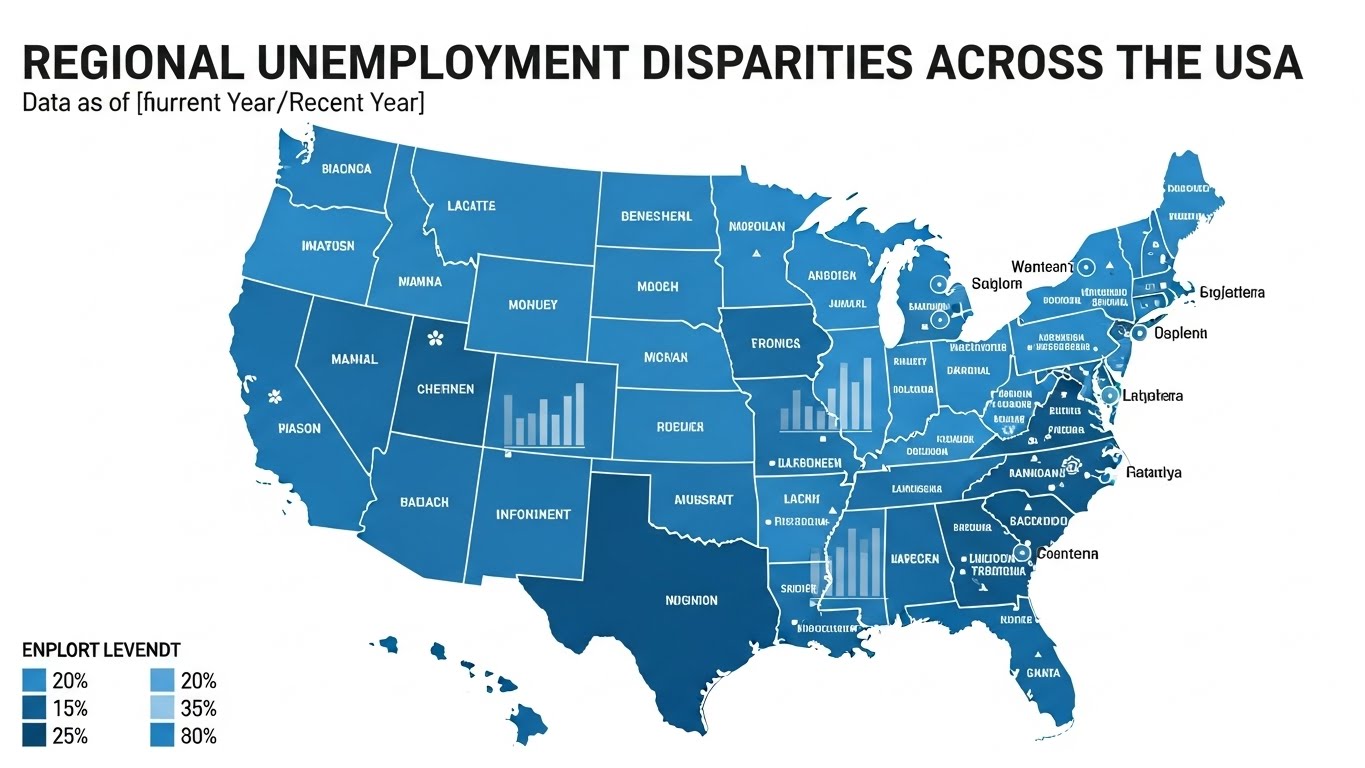
Right now (late 2025), the national unemployment rate sits around 4.2%. Sounds pretty good, right? But here’s the kicker:
- North Dakota and South Dakota? Under 2.5% – companies are literally fighting over workers.
- California and Nevada? Still hovering between 5–6% in many areas.
- Parts of rural Appalachia, the Rust Belt (think western New York, eastern Ohio, West Virginia)? Some counties are stuck at 8–12% unemployment. That’s Great Recession-level bad.
It’s not just numbers on a screen. I’ve got friends in West Virginia who are driving 90 minutes each way for a warehouse job because there’s literally nothing closer.
Why Does This Happen? The Real Reasons (No Economics Jargon)
- The Death and Birth of Industries
When steel mills, coal mines, and textile factories closed in the 80s and 90s, whole regions lost their main employer overnight. Places like Detroit, Youngstown, or Scranton never fully recovered. Meanwhile, Texas, North Carolina, and Utah built new economies around energy, tech, finance, and logistics. - People Follow Jobs, Jobs Follow People
Once a city starts growing (Austin, Charlotte, Boise), more companies move there → more jobs → more young people → even more companies. It’s a snowball. The opposite happens in shrinking towns – schools close, hospitals downsize, and the cycle gets ugly. - Education and Skills Mismatch
A lot of open jobs today need coding, nursing, or trade skills (electricians, plumbers, etc.). If your area only has old factories that shut down, and there’s no community college teaching those new skills… you’re stuck. - Cost of Living vs Wages
Places with super low unemployment (like the Dakotas) sometimes pay less than you’d think because housing is cheap. Places with high unemployment (parts of California) have insane rent, so even people with jobs feel broke.
Real-Life Stories I’ve Seen With My Own Eyes
- My buddy Mike in Dayton, Ohio: Talented mechanic, but the GM plant cut 2,000 jobs. He ended up delivering for Amazon packages just to pay rent.
- My cousin Ayesha in Dallas: Moved there with zero connections in 2021, got three job offers in cybersecurity within a month. Same degree, same age as Mike.
- My own move: Left Michigan (6.5% unemployment when I left) for North Carolina (3.8%). Doubled my income in 18 months. Felt guilty at first, but my mom literally told me, “Go where the opportunity is, baby.”
So What Can You Actually Do If You’re in a High-Unemployment Area?
Here’s the practical stuff nobody sugarcoats:
- Learn in-demand skills online (Google Career Certificates, Coursera, free YouTube). I learned basic digital marketing on my phone while working night shifts – now it’s my full-time job.
- Look at “second-tier” booming cities: Boise, Raleigh, Huntsville, San Antonio, Salt Lake. Cheaper than California, growing like crazy.
- Consider trades. Electricians, plumbers, and welders are making $80k–$120k in many states with almost 0% unemployment in those fields.
- Remote work is still a thing in 2025 – companies in New York and San Francisco hire people in Missouri and Arkansas all day long.
- Don’t be ashamed to move. I know it feels like “giving up” on your hometown, but your kids will thank you for giving them better schools and safer streets.
The Emotional Side Nobody Talks About
Leaving your family, your favorite diner, the woods you grew up in – it hurts. I still get homesick for Michigan lakes. But watching your parents stress about bills hurts more. There’s no shame in building a better life, even if it’s 1,000 miles away.
And if you’re in a booming area? Reach back. Mentor someone online, hire remotely from struggling states, vote for training programs. We’re all in this together.
Final Thoughts – You’re Not Stuck
Listen, the map of job opportunities in America looks unfair as hell sometimes. But it’s not set in stone. People move, learn new skills, start businesses, and change the story of their region every single day.
You’ve got more power than you think.
If you’re feeling trapped by regional unemployment disparities in the USA right now, drop a comment and tell me where you’re at. I answer every single one, and I’ll happily point you toward free resources or cities that are actually hiring like crazy.
You got this.
Stay strong,
Ghulam