Unemployment and inflation connection
How Unemployment and Inflation Are Connected (Explained Like We’re Having Coffee)
Hey friend, it’s Ghulam here. Back in 2020–2022 I watched my freelance income drop almost 70% overnight while the price of everything (rent, groceries, even my favorite biryani) kept climbing like crazy. I remember standing in the supermarket thinking, “How can I be out of work AND everything costs more at the same time?” That’s when I really started digging into the connection between unemployment and inflation — and trust me, once you see it, a lot of news headlines suddenly make sense.
Let’s break this down in plain, everyday English — no economics degree needed.
What Is Inflation Again? (Super Quick Reminder)
Inflation is just when prices go up over time. Your $5 shawarma becomes $8, then $11. A little inflation (2–3%) is actually normal and healthy, but when it shoots to 8–15% like we saw recently, life gets stressful fast.
What Is Unemployment?
Simple: the percentage of people who want a job but can’t find one. When that number is high, a lot of families are hurting.
The Big Question: Do They Always Move Together?
Nope — and that’s what confuses most people.
Sometimes they move opposite (classic trade-off), sometimes they move together (that’s when it really sucks). Here are the two main situations everyone talks about:
1. The Classic “Trade-Off” — The Phillips Curve (Opposite Movement)
For decades economists believed there’s an inverse relationship:
- Low unemployment → companies fight for workers → they raise wages → higher wages push prices up → inflation rises.
- High unemployment → tons of people looking for jobs → wages stay flat or drop → companies don’t need to raise prices → inflation stays low.
Real-life example: In 2018–2019 the U.S. unemployment rate dropped below 4% (super low), and everyone was getting raises and new job offers left and right. Inflation crept up a little, exactly like the textbook said.
2. When They Rise Together — Stagflation (The Worst Combo)
This is what breaks the old rule and makes people panic.
High unemployment + high inflation at the same time = stagflation.
We saw this in:
- The 1970s oil crisis
- 2021–2023 after COVID supply chains broke + governments printed tons of money
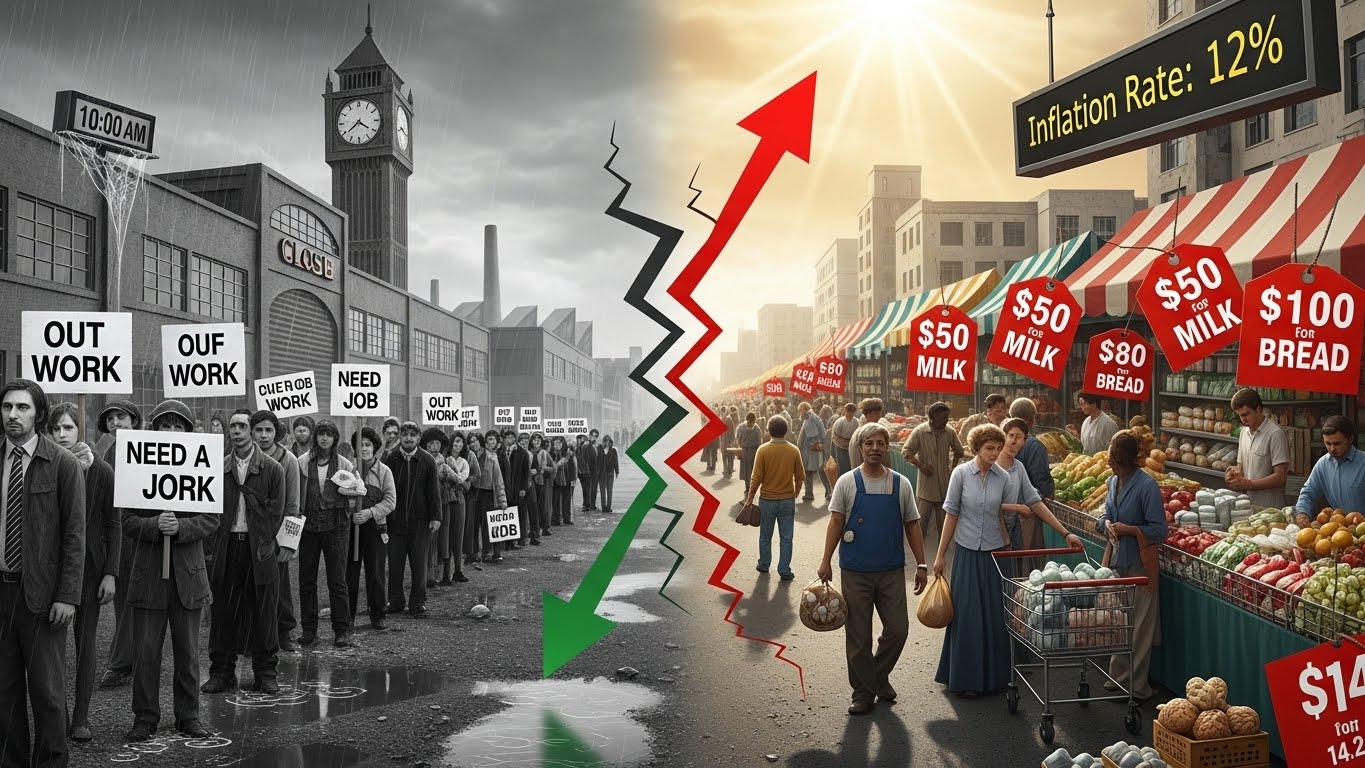
My personal story: In 2022 I had friends who were laid off from tech companies while their grocery bill went up 30%. No job AND everything costs more — that’s brutal.
Why Does Stagflation Happen? (The Simple Reasons)
- Supply shocks (war, pandemic, oil prices spike) → everything costs more to make → inflation, even if no one has money.
- Too much money printed → people have cash in their pocket → demand stays high → prices rise, even when factories are half-empty.
- Wage-price spiral gets stuck → companies raise prices → workers demand higher pay → companies raise prices again… but if jobs are disappearing, the spiral still hurts.
How This Actually Affects You and Me
- When inflation is high and jobs are scarce → your savings lose value every month and you can’t find work to replace it.
- Rent, food, fuel go up first → the stuff we can’t skip.
- You delay big purchases (new phone, new laptop for freelancing → economy slows even more.
I felt this in 2022: my emergency fund was literally shrinking every week because of inflation, and clients were freezing budgets. Double punch.
What Can You Actually Do? (Practical Tips from Someone Who Lived It)
Here are the moves that saved me:
- Build multiple income streams now (freelancing, side gigs, digital products) — when one dries up, others keep you alive.
- Keep 6–12 months of expenses in cash or very safe places during high-inflation times.
- Learn high-demand skills that are “recession-resistant” (AI tools, healthcare, trades) — these jobs disappear last.
- Track your spending monthly — when prices rise 15%, you often need to cut 20–25% to stay even.
- Invest in yourself — I learned video editing and SEO in 2021; those skills paid my bills in 2023 when design work slowed.
The Good News (Yes, There Is Some)
Central banks (like the Federal Reserve or RBI) are obsessed with keeping both unemployment and inflation low. When they do their job right, we get the “Goldilocks” zone — decent jobs and stable prices.
And history shows stagflation periods don’t last forever. Painful? 100%. Permanent? Never.
Wrap-Up: You’re Not Powerless
Unemployment and inflation are connected, but not always in the way people think. Sometimes they move opposite (the old rule), sometimes they gang up on us together (stagflation). Understanding which one we’re in helps you protect yourself and even find opportunities.
If you’re feeling the squeeze right now — I’ve been there. Take a deep breath, pick one small action from the list above, and start today. You got this.
Drop a comment and tell me — are you seeing more job worries, price worries, or both where you live? Let’s talk.
Stay strong, Ghulam